Reading streak: 0 days
An article · Intent
The Cost of an Unclear Ask
Most meetings fail before a word is spoken, in the one place no one thinks to look: what you actually wanted the room to do.
There is a particular silence that follows a good presentation. You have spoken well. The slides were clean, the voice was steady, the room was polite. And then nothing happens. No decision, no movement, no next step. Everyone thanks you and files out, and the thing you came to get is exactly as far away as when you walked in.
[YOUR STORY: describe a specific time you presented well and left with nothing. The meeting, who was there, what you were actually trying to get, and the moment you realized afterward that you had never once said what you wanted them to do. Keep it concrete: a room, a date, a feeling.]
For a long time I thought the fix was to present better. Sharper slides. A stronger open. More confidence at the front. So I worked there, sincerely, for years. And the silence kept coming.
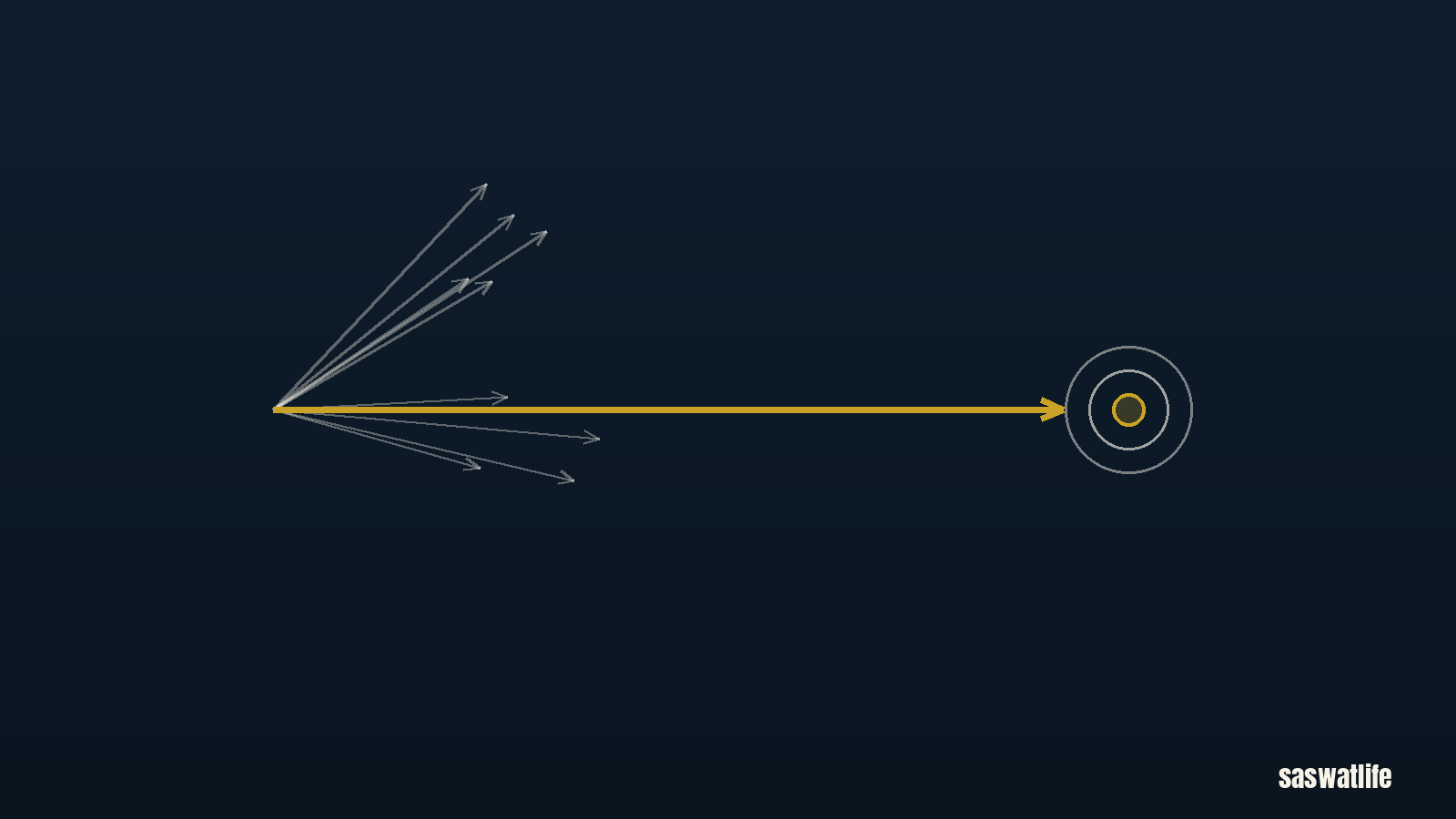
The break was not in how I spoke. It was in what I wanted the moment to do, which is to say I had never decided. I walked into rooms to inform when I needed them to choose. I explained when I should have asked. I laid out the whole landscape and left the room to guess which hill I wanted them to take. A ship without a port finds no favourable wind. My presentations had no port. They were beautifully rigged and pointed nowhere.
Intent is the first of the five dimensions, and it is the quietest, because it does its damage before you open your mouth. It is not what you say. It is what you want the saying to accomplish. Decide the room should approve the budget, and every sentence bends toward that. Decide nothing, and every sentence drifts, and the room drifts with it.
Here is the test I use now, and it costs nothing. Before any meeting that matters, I finish this sentence: when this is over, I want them to ______. Not "understand." Not "be aware." A verb they could act on. Approve. Choose. Commit. Say yes to a date. If I cannot finish that sentence, I am not ready to walk in, however good the slides are.
Notice what this is not. It is not manipulation, and it is not aggression. It is honesty about the destination. The room can feel the difference between a person who knows where they are going and one who is hoping to be carried somewhere by the momentum of their own talking. The first is followed. The second is endured.
This is why the same failure fools so many capable people. Two managers give flat presentations. One has a delivery problem: she knows exactly what she wants and cannot make herself ask for it. The other has an intent problem: he could ask beautifully, but he never decided what to ask for. Identical symptom, opposite cure. Send them both to a public speaking course and one improves while the other wastes a year polishing the wrong thing.
If your meetings keep ending in that polite silence, do not reach first for delivery. Reach for intent. Reopen the last three rooms that went nowhere and ask, honestly, what you wanted each of them to do. If the answer is fuzzy, you have found your dimension. And an unclear ask is not a talent you lack. It is a decision you have not yet made, and decisions are curable.
Be heard. Be remembered. But first, find out where it breaks.
Next on the shelf: Deciding Before You Speak · or see the five dimensions the articles draw from.
When you are ready:
The First Call