Reading streak: 0 days
An article · Delivery
Why do I hesitate and lose fluency mid sentence
The hesitation is not a shortage of words. It is a sentence built longer than the breath carrying it.
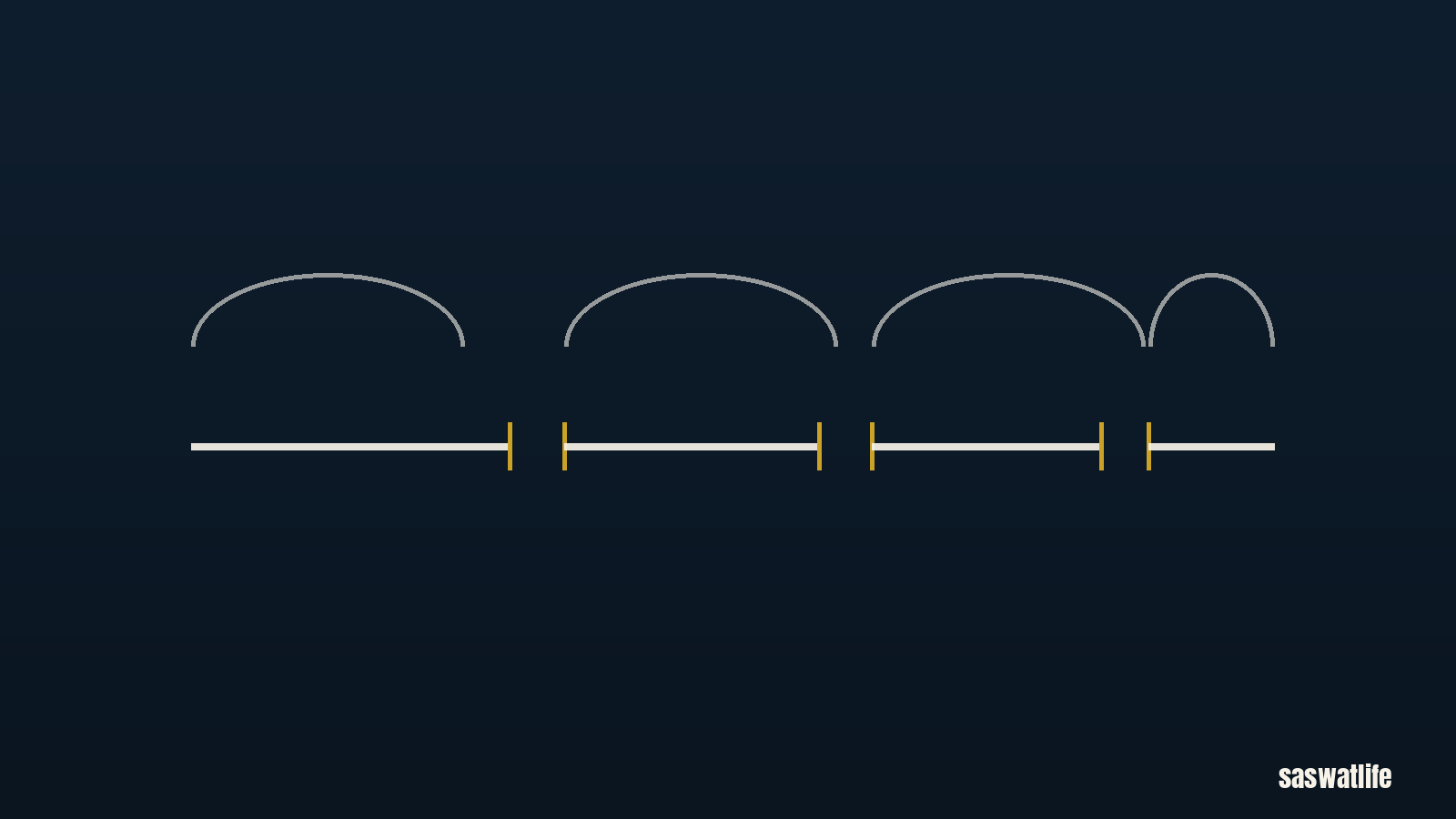
You are mid sentence and going well, and then a small gap opens. A syllable held a beat too long, an um, a word that arrives late. You hear it happen, which is the worst part, and hearing it makes the next gap more likely, and by the third one you are listening to yourself instead of to the person in front of you.
That stumble is not evidence of a poor vocabulary or an anxious personality. It is a rhythm problem with a mechanical cause, and rhythm is curable.
Fluency is not speed, it is continuity, and continuity breaks when the breath and the sentence disagree. Most people who hesitate have taken a breath sized for a short sentence and then attempted a long one, so the air runs out at the exact moment the clause needs support. The voice thins, the mouth stalls, and the brain, which was working perfectly, gets the blame. This is the third dimension, Delivery, which is not about what you say but about how it leaves you.
I once recorded a client reading a paragraph he knew by heart. Fourteen hesitations in ninety seconds. Then I asked him to read the same paragraph while walking slowly across the room. Four. Nothing about his language had improved in the intervening minute. The walking had given his breath a rhythm to hold on to, and the sentences borrowed it.
This is why vocabulary work so often disappoints. People who hesitate go looking for more words, and more words make the sentences longer, and longer sentences require more air than the breath they set out with. The reading gets richer and the speaking gets worse, which feels like a personal failure and is really a matter of arithmetic.
There is a second cost that nobody mentions. Your listener does not hear the gap as breath. They hear it as doubt about the content, which means a fluent stranger can read as more credible than a hesitant expert. That is unfair, and it is also reliably true, and it is the reason this is worth correcting rather than tolerating.
Once you know to listen for breath rather than for words, you can hear the cause in real time. The hesitation almost never lands where the thought is hard. It lands where the air ran out.
The same misreading works in reverse, and it is worth guarding against. Some very fluent people say almost nothing of substance, and rooms believe them for a while. Fluency is not a proxy for judgement. What you are after is not smoothness for its own sake, it is a delivery that stops getting in the way of what you actually know.
So the drill is about air, not vocabulary. Take anything with sentences in it. A news paragraph, an email you were about to send, a page of whatever you are reading. Read it aloud, and before each sentence take one deliberate breath in through the nose, then commit to finishing that sentence on that breath. When you cannot finish it, stop and shorten the sentence until you can. Five minutes a day, different text every time. You are not practising the passage. You are teaching yourself to size a sentence to the breath you have, and that sizing is the thing that holds later, when you are speaking without a script.
There is a Done For You version of this, calibrated to your own recorded speech rather than to a page. It sits inside the work, not on this page.
If the hesitation is costing you rooms, The First Call will tell you whether Delivery is really where it breaks, because sometimes it is not. Fifteen minutes, free, nothing to prepare. You leave knowing the dimension. One door: saswatlife.com. Be heard. Be remembered.
Next on the shelf: Why do I freeze in front of people who matter · or see the five dimensions the articles draw from.
When you are ready:
The First Call