Reading streak: 0 days
An article · Delivery
Why does my energy drop the longer I talk
The drop is not stamina. It is what happens when nothing in the delivery is renewing itself.
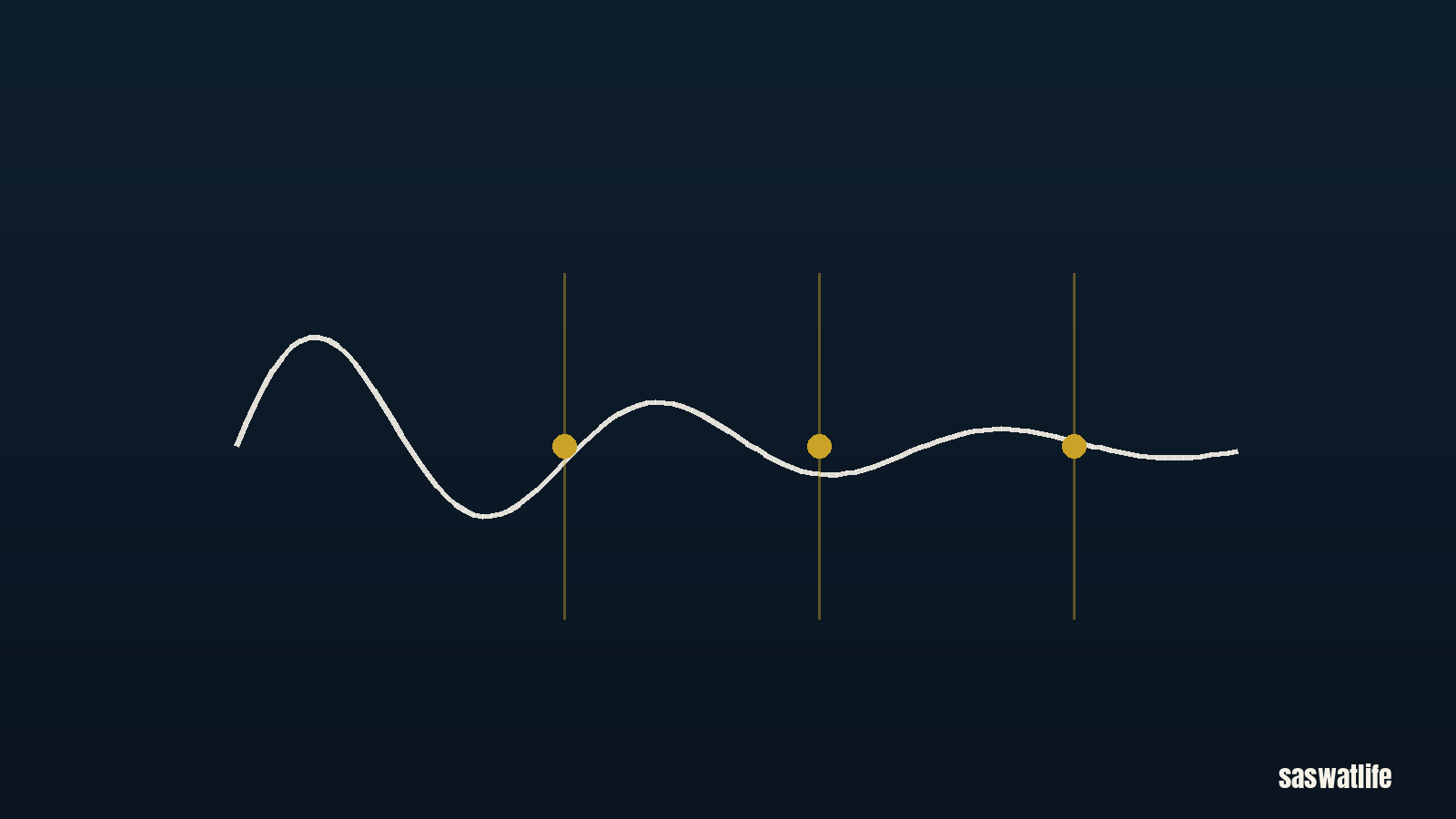
The first two minutes are good. You know it while it is happening. Then somewhere around the fifth minute something leaks out of the room and out of you at the same time, and you can hear your own voice settling into a lower, duller register. You are still saying accurate things. Nobody is being rude. But the thing that was alive at the start is not alive now, and the last stretch is you carrying a weight to the finish.
This is not poor stamina and it is not an age or fitness problem. It is a renewal problem, and renewal is curable.
Energy in speech is not a tank you fill before you start. It is generated continuously, and it is generated by change. New shape, new pace, a question, a pause, a shift in what you are asking the listener to do. When nothing changes, nothing renews, and the level falls no matter how much you cared at the outset. Most people who fade are delivering their whole stretch in a single unbroken mode, which is the spoken equivalent of one long paragraph. That is the third dimension, Delivery, and the fade is not you running out. It is the form running out.
You can test this on yourself in an afternoon. Think of a conversation you had recently that ran an hour and cost you nothing. It will have been full of change, turns, questions, interruptions, laughing. Then think of the eight minute update that emptied you. The difference was almost certainly not duration and not subject. It was how many times the shape changed.
The instruction usually offered is to bring more energy, and it is the least useful thing you can be told, because it asks for a bigger tank rather than a working generator. Push harder at the start and you simply arrive at the fade sooner and more tired.
Once you see it as renewal, you also stop blaming the room. A flat audience is very often a consequence rather than a cause, and it turns around within about thirty seconds of the first genuine change of shape.
There is a loop in this worth breaking early. Your energy falls, the room reads the fall and settles, you read the settled room as disinterest, and that reading takes a further piece out of you. Within about a minute each side is confirming the other and nobody present could say who started it. The person who can break it is you, and breaking it costs one deliberate change of shape rather than a greater effort of will.
So the drill is to build changes into whatever you have to deliver, before you deliver it. Take anything you must say that runs longer than two minutes and mark three points in it where the shape will change. One becomes a direct question to the room, even a rhetorical one. One becomes a deliberate silence of two full seconds. One becomes a shift in scale, from the general to one specific concrete example, or the reverse. Mark them physically on the page. Then deliver it. Do this every time for a fortnight, varying which kinds of change you use. You are not adding excitement. You are giving the delivery something to renew itself on, roughly every two minutes, which is about how long a single unchanged shape can hold anybody including you.
There is a Done For You version of this, mapped onto the actual formats you have to speak in. It sits inside the work, not on this page.
If you keep starting strong and finishing hollow, The First Call is fifteen minutes, free, and there is nothing to prepare. You talk, I listen, and by the end we both know whether this is work worth doing. The locating itself happens in The Diagnosis. One door: saswatlife.com.
Next on the shelf: Why do I lack confidence the moment I start speaking · or see the five dimensions the articles draw from.
When you are ready:
The First CallNot ready for that yet? New articles are announced on the saswatlife channel on WhatsApp.